
My Story
I started as a carpenter, not an inspector.
Forty years ago I was on the tools in New Zealand, then the Sunshine Coast. Framing walls. Laying floors. Building houses from the slab up. Carpentry led to building, building led to inspections. By the time I picked up the licence I’d spent decades building the sort of homes I was being asked to check.
I don’t work off a checklist. I know how a house goes together, so I know where it comes apart. I know where corners get cut because I’ve watched it happen. I know what a floor that’s dropped 80mm feels like underfoot, because I’ve built floors.
Over 3,800 inspections later, I still do every one myself.
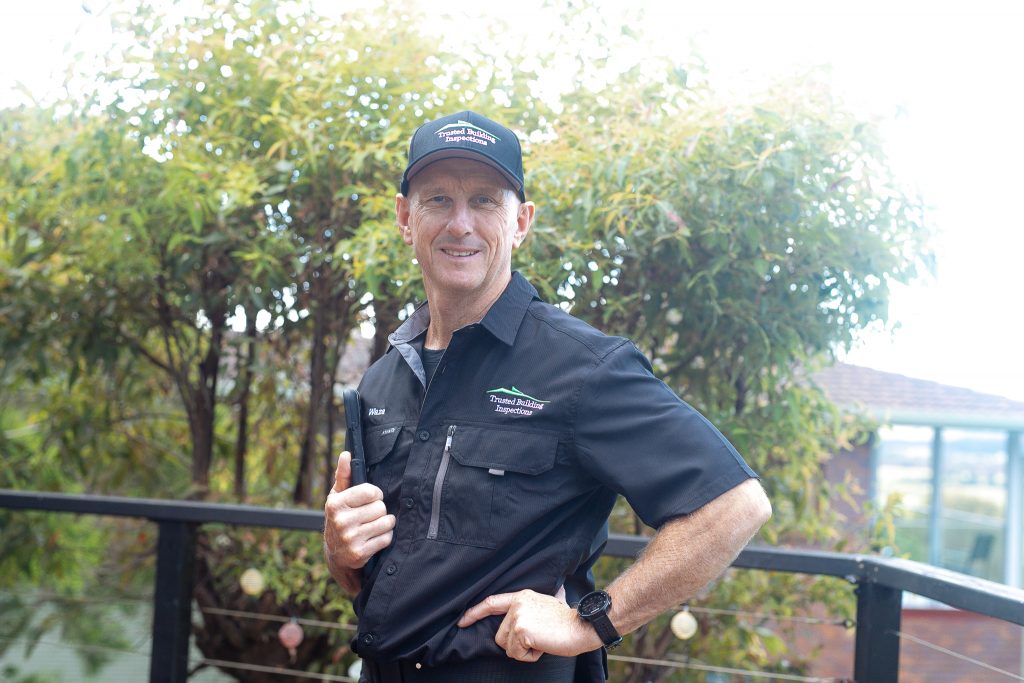
Who I am
I’m Warren “Waza” Smith. Most people skip straight to Waza. I’m a QBCC-licensed building and pest inspector working the Sunshine Coast and Gympie.
I do every inspection myself. No contractors. No juniors. You get me on the phone, me on your roof, and me walking you through the report before I leave.
I’m one of the only QBCC-licensed inspectors actively covering both the Sunshine Coast and Gympie, with suburb-level knowledge in each. You can see what a full inspection includes on my building and pest inspection services page.
- QBCC Licence #1206986
- Pest Licence #PMT007766319
- 40 years in the building industry: carpenter, builder, licensed inspector
- 3,800+ inspections completed
- Sole inspector. No contractors, no subcontracting
- Reports within 24 to 48 hours, red and green system
What I find out here
The Sunshine Coast isn’t one market. Every area has its own patterns and I know them, because I’ve been inspecting them for years.
Noosa is wood rot in the older character homes. Behind architraves, in subfloor timbers, in deck bearers that look fine from above. Around Tewantin it’s termites. I’ve been through 1960s timber homes there with damage running four feet up the walls.
Maroochydore is rusting steel off the salt air. Roofing, brackets, fixings. Canal homes cop it worst.
Caloundra splits two ways. Asbestos and dated wiring in the old beach shacks. Builder defects in the new estates.
Buderim is termite pressure and steep blocks. Subsidence, slumping, and high-set Queenslanders with problems under the floor.
Gympie is termites and wood borers through the older stock. Timbers in ground contact. Barriers nobody has maintained.
It isn’t only about the suburb, either. Houses built between the mid 80s and the late 90s are the ones I slow down for. Regulation was looser then and the shortcuts show up now, thirty years on. Shadow clad is the material I see cause the most grief.
Different area, different risk. I know where to look before I’m through the door.
How I work
Every inspection finishes the same way. I walk you through what I found, at the property, before I leave. Not a phone call the next day. Not a report that lands in your inbox with no explanation. You stand next to me and I show you. Most people tell me that half hour is worth more than the report.
The written report follows within 24 to 48 hours. Red flags what needs attention. Green confirms what’s sound. Your solicitor can read it. So can your builder. That’s deliberate.
Some of it is method and some of it is instinct. I had a place recently with nothing showing on the surface. Nothing you’d photograph. Something about it didn’t sit right, so I put the moisture meter on it anyway, and there was water where there shouldn’t have been. Forty years of walking through houses tells you when to keep looking.
If you want the detail on what I’m actually looking at, I’ve written it up as a building inspector on the Sunshine Coast.
Every inspection has a defined scope. What’s covered, and what sits outside a standard visual inspection, is set out on my scope and limitations page.
The gear I use
A torch and a moisture meter will only tell you so much. I carry four specialist tools on every job.
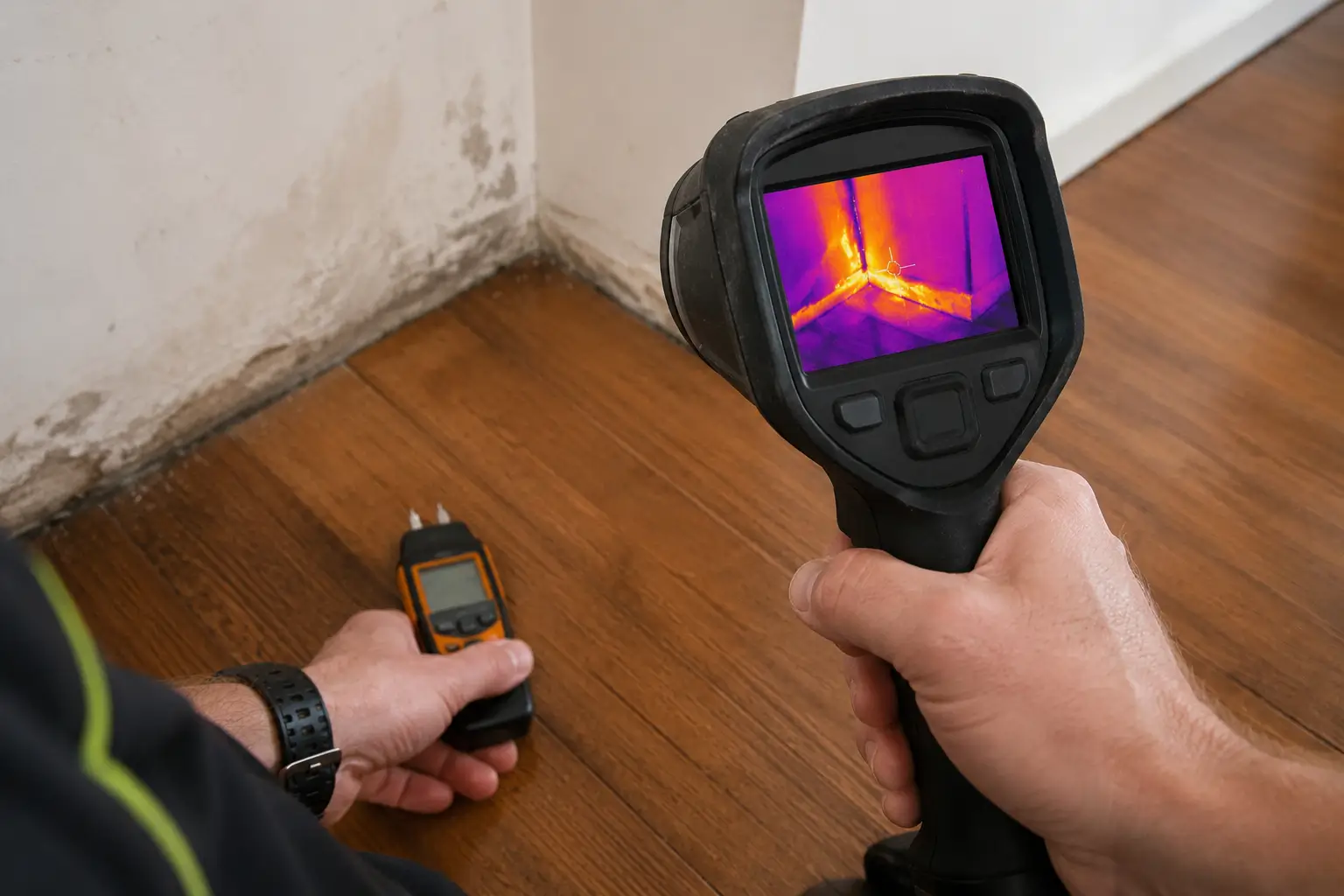
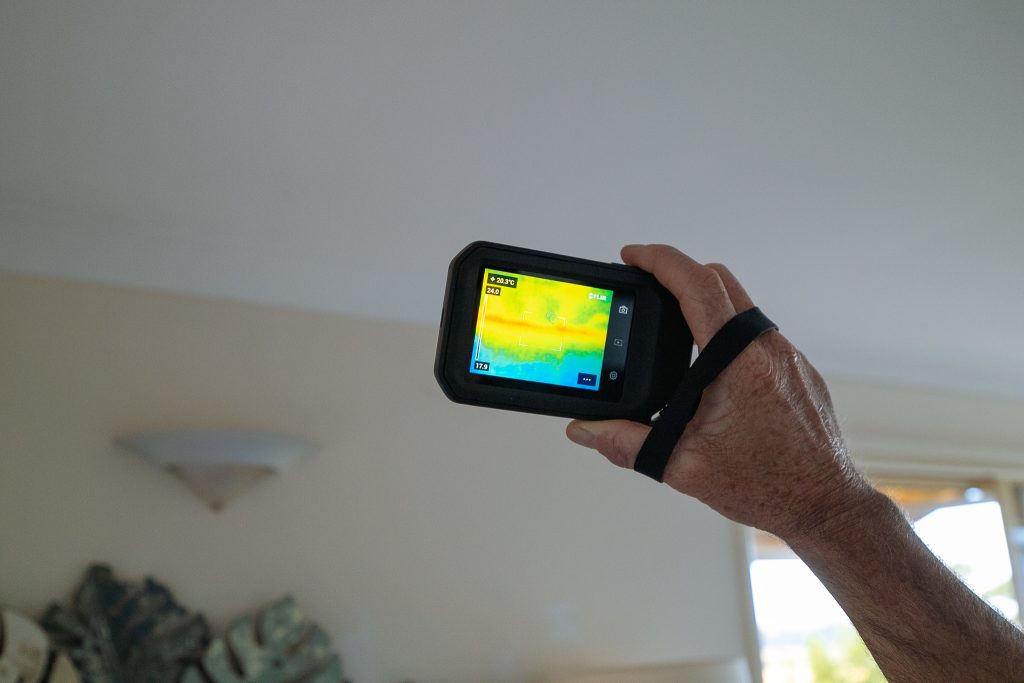
FLIR Cx3 thermal camera. Picks up heat and moisture behind walls and ceilings without drilling. Finds water damage and termite activity before anything shows on the surface.
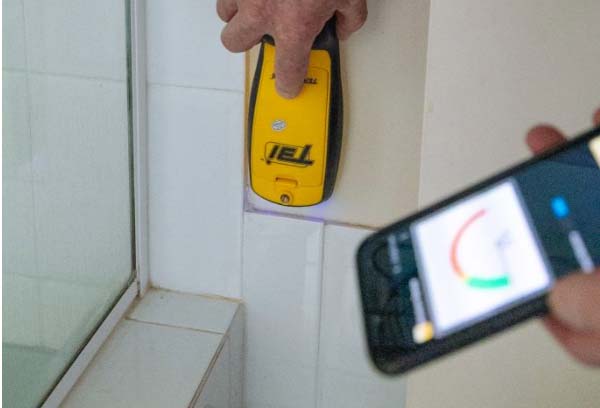
Termatrac dual-mode radar. Reads termite movement through walls using microwave and moisture sensors. I can locate active termites without touching the wall.
Tramex moisture meter. Puts a number on moisture in timber and building materials. Confirms what the thermal camera picks up.
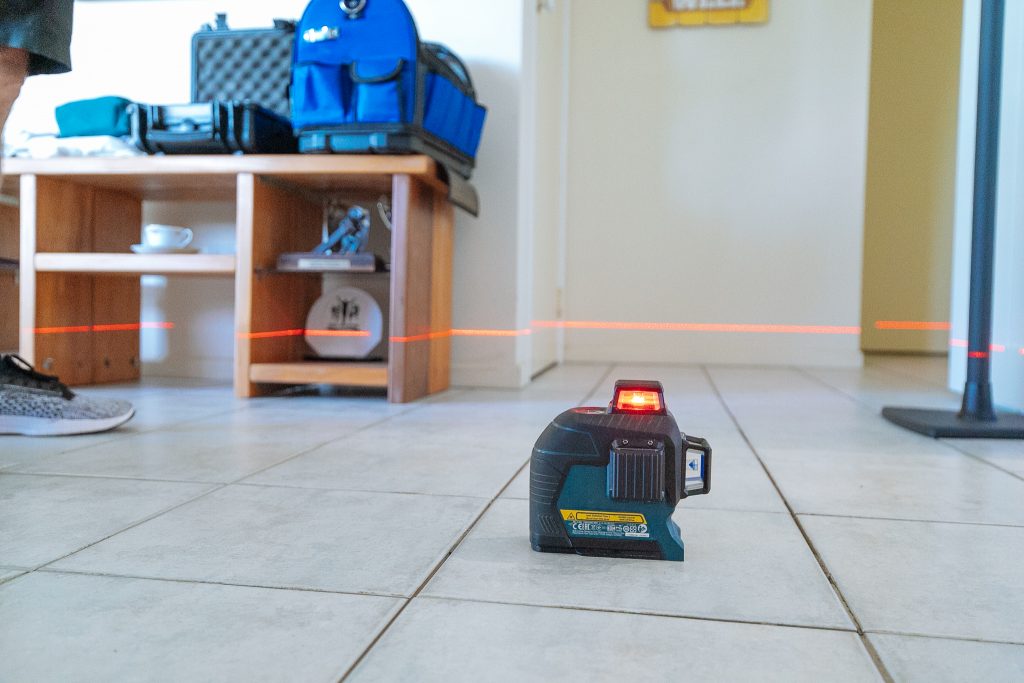
Bosch laser level. Measures floor levels and structural movement. A floor that looks level can be out by 80mm. I found exactly that on a $1.2 million place at Battery Hill. The buyers had never seen the house until inspection day. They walked.
The gear costs money and takes time to use properly. I carry it because a torch only tells you what’s on the surface.
Who I work for
I don’t work for the vendor. I don’t work for the agent. I work for you.
My job is to tell you what’s there, good or bad. A young couple once had me look at a rural property they were nervous about. Looked rough from the road. I went through it expecting the worst. Nineteen forties build, solid as anything. No leaks, nothing broken. I came away pleasantly surprised and they went ahead with confidence.
That’s the job too. Not hunting for faults. Telling you what’s actually there.
Inspections start from $399. A standard four bedroom, two bathroom home runs $539 to $619. The detail behind the pricing is on the building inspection cost page.
No fuel surcharge either. I drive a Tesla.
Book an inspection
Call me direct or book online and I’ll sort you out. Ask for Waza, everyone does.
Phone: 0469 904 139
Email: info@trustedbuildinginspections.com.au
Book a building inspection online, or have a look at the case studies page to see what turns up on real jobs.