
Choosing the right building inspector on the Sunshine Coast could be the most valuable decision you make in the entire property buying process. Fast forward. You’ve found a property, the contract is on the table, and someone’s just told you to get a building inspection done. Here’s what to actually look for – and why the decision matters more than most buyers realise.
1. What to verify when choosing a building inspector on the Sunshine Coast
A legitimate building inspector in Queensland holds a current QBCC licence. A pest inspector holds a separate pest licence. Check both at the QBCC Licensee Register before booking. You can look up my credentials by using license number #1206986. It takes 30 seconds and confirms the license is active, what it covers, and whether any complaints have been recorded.
This isn’t bureaucratic box-ticking. My QBCC licence (#1206986) and Pest Licence (#PMT007766319) are published openly on this website because that’s how a legitimate inspector operates. If a business makes it hard to find its licence number, that tells you something.
Here’s what’s revealing about this industry on the Sunshine Coast: there are real estate agents who won’t use certain inspectors for their own listings; however, the moment a family member or friend is buying, they call a completely different inspector. That gap between what gets recommended in a transaction and what gets used when it’s personal is worth thinking about.
2. Confirm the same person who answers the phone is doing your inspection
The inspector who takes your booking should be the inspector who shows up – this is especially important when choosing a building inspector on the Sunshine Coast, where there’s a significant difference between operators. Some companies take bookings and dispatch whoever’s available. That’s not the same service.
Here’s why it matters in practice. A vendor arranged a pre-sale inspection and offered the report to buyers. One buyer decided to get their own, that was when I was called at Trusted Building Inspections. Upon inspection my report came back with half a dozen major faults the original didn’t mention: moisture around showers, cracking to exterior walls, and rust across the roof. The first inspector hadn’t even gone up to look at the roof!
The quality of an inspection depends almost entirely on the experience of the person with the torch in their hand. When you book with Trusted Building Inspections, I conduct your inspection and will walk you through my findings. Every time. Over 3,700 inspections, 40 years in the building industry, and no subcontracting. If you have other questions about our process and how we run things you can check out our common questions buyers ask.
Ask before you book: “Will you personally be doing my inspection?” The right answer is an unambiguous yes.
3. Ask about their background in the building industry - not just inspections
The best building inspectors on the Sunshine Coast have spent decades in the building industry. Either as carpenters, builders, or trade people, all before becoming inspectors. That background changes what they see on a property.
I started out my journey as a carpenter and builder. Forty years in the industry means I know what buildings should look like from the inside out, including what gets hidden, what gets skipped, and what the building regulations of each era actually required.
The 80s and 90s are what I call the “red-flag era.” Building regs were relaxed, termite barriers weren’t compulsory and were often installed incorrectly or not at all, untreated timbers were common, and waterproofing wasn’t standard. As a result, leaky showers show up so consistently in properties from that period. Shadow clad, a timber sheet cladding used through the 90s, is another consistent find. If that cladding hasn’t been correctly primed, installed, and maintained, water gets into the joins and rots the sheet from the inside. It can look completely fine from the outside until it doesn’t.
Upon arriving to the inspection I begin working my way around the property before reaching the front door. I walk the grounds first, fences landscaping, drainage, anything leaning against or built up against the building. It’s a routine built from knowing that what’s happening at the edges of a property often tells you what’s happening inside it.
4. Confirm what technology is included and what it has actually found
A thorough building inspection on the Sunshine Coast should include moisture detection, thermal imaging, and termite radar – not just a visual walkthrough. Ask what technology is used and ask for a specific example of something it found that a visual check would have missed.
Personally, I use a combination of these 4 tools for every inspection:
Tramex moisture meter
The most consistently productive tool in Sunshine Coast properties. finds moisture from leaky showers, plumbing, and roofing in places that look completely dry on the surface. More sensitive than thermal imaging for moisture specifically.
FLIR thermal camera
Used around showers and anywhere a leak is suspected. Particularly important in coastal environments like Maroochydore, where salt air causes significant rusting of steel components – roofing brackets, fixings, structural steel – that doesn’t reveal itself on a standard visual inspection.
Termatrac dual-mode radar
Used when termites are suspected. Identifies whether termites are active in the wall, how active they are, and tracks them back to their source location. That last capability matters – it’s the difference between knowing there’s a problem and understanding the full extent of it. I’ve been doing this long enough that when my instinct says something’s off, the Termatrac generally confirms it within ten minutes.

Bosch laser level
I use the Bosch laser level predominantly for structural assessment. Essential on Buderim’s steep blocks and in older stumped construction. An uneven floor can be cosmetic or it can indicate slumping stumps and settling foundations – a major finding. Surprisingly I find this once a month.
None of this replaces experience. The tools tell you what to investigate. Experience tells you when to reach for them.
5. Read a sample report and ask what the full inspection covers
Ask for a sample report before you book, and ask specifically what the inspection includes beyond the standard visual check – because the scope varies significantly between operators.
We do offer a premium inspection add on including checking electrical appliances, air conditioning systems, gas systems, and asbestos identification. Most building inspectors don’t include these. On a Sunshine Coast property built before 1990, asbestos-containing materials often appear in eaves, wall sheeting, roofing, and wet areas. That’s not an unusual finding – it’s a known characteristic of properties from that era. But you need an inspector who’s looking for it. For a full breakdown of the inspection services we offer you can check out our guide on how much a building inspection costs.
On reporting style: We found over the years that the best system that’s easy to understand and quickly scan for serious problems or issues needing attention is our red and green system. Red flags what needs attention. Green confirms what’s sound. You can scan the full picture without reading an essay. Most inspectors either over-report everything to protect themselves or under-report to keep real estate relationships intact. Neither of those serves the buyer. we’ve found that simple is easier digest and get information across quickly.

6. Check recent Google reviews, and read what they describe specifically
Reviews that describe specific findings and outcomes are more useful than star ratings. Look for detail: what was found, how it was communicated, what the buyer was able to do with the information.
One of my previous clients described their inspection this way “He saved us from making a $1.3 million mistake.” That’s not a tagline, it’s a buyer describing a real financial outcome from a Sunshine Coast Inspection.
Also check recency. Consistent recent feedback across the past 12 months is a more reliable signal than volume accumulated over many years with little since.
7. Understand how serious findings are communicated on the day
Your building inspector should notify you of serious findings the same day 0 ideally while still on-site, not days later via a PDF.
Generally we prefer you to come along for the inspection. When we’re there, I’ll walk you through the findings as they happen. If you’re unable to attend, I’ll call and notify you of any problems that were found on the same day, followed up with a proper report within 24-48 hours, unless otherwise arranged prior to booking. There’s no good reason to be left waiting three days to find out whether your purchase has a structural problem.
8. Look for genuine local knowledge of the Sunshine Coast and Gympie
Local experience changes what an inspector looks for and what they find. The Sunshine Coast and Gympie have specific conditions – coastal salt air, subtropical humidity, hinterland termite pressure, flood-prone areas; these require genuine regional familiarity.
In practice this means: older beach shacks in Caloundra frequently contain asbestos in eaves and wall sheeting, alongside outdated wiring and salt-corroded steel. In Noosa Heads and Tewantin, wood rot and termite activity are recurring findings in older character homes. Buderim’s steep blocks bring termite pressure and subsidence risk together on the same site. Gympie’s older housing stock brings termite and wood borer issues as a consistent pattern, with flood and hail damage adding structural complexity in some areas.
One thing worth saying plainly: don’t let home renovation television shape your expectations about termites. Almost all of those shows are filmed in Melbourne, where termites are barely an issue. On the sunshine Coast, in the hinterland, and in regional Queensland – a genuinely different situation that requires an inspector who understands that difference.
What happens when buyers skip the inspection

- A couple bought without a pre-purchase inspection. After moving in, they started noticing problems and called me to assess the extent of the issues. Upon conducting a thorough inspection, I found a leaky shower and a ceiling that had been painted over, covering water stains before the sale. The repairs cost them tens of thousands of dollars. Their insurance wouldn’t cover it – because there was no pre-purchase inspection.
- A young couple were viewing a Battery Hill property for the first time on inspection day. The real estate photos from the listing were old, and the property had deteriorated since those original photos had been taken. During the inspection, together we noticed an aggressive slumping in on direction down 80 millimetres! This indicated there were some major structural problems that needed to be addressed. The asking price was $1.2 million. This young couple pulled out and couldn’t be more grateful that we conducted the inspection together before finalising any contracts. The inspection cost them a few hundred dollars instead of what could have been thousands of dollars after signing the contract.
The inspection is the one step in the buying process where an independent, experienced person goes through the property specifically looking for what would cost you money. Everything else in the transaction is working toward getting the deal done. The inspector is the only one working specifically for you.
Before you book any building inspector - the checklist
- QBCC licence verified at QBCC Licensee Register – not just claimed on a website
- The same inspector who takes the booking does your inspection
- Real building industry background – decades of hands-on experience
- Moisture meter, thermal imaging, and Termatrac included as standard
- Sample report reviewed before booking – clear, not an essay
- Full Scope confirmed – does it include electrical, AC, gas, and asbestos?
- Recent Google reviews describing specific findings and outcomes
- Same-day communication of serious findings
- Genuine local knowledge of the Sunshine Coast and Gympie from a building inspector who works here regularly
Frequently asked questions
How much does a building inspection cost on the Sunshine Coast?
Building and pest inspections on the Sunshine Coast typically range from $399 for a standard inspection up to $619 for a 4-bedroom 2-bathroom property. Price depends on size number of storeys, age, access and condition. Call me (Waza) on 0469 904 139 for an exact quote.
How long does a building inspection take?
A standard pre-purchase inspection typically takes 1.5 to 2.5 hours on-site depending on the size and complexity of the property.
Can I attend the building inspection?
Yes – I actually encourage you to attend. During the inspection I’ll walk you through findings as they happen rather than leaving you to interpret a PDF.
Do you inspect in Gympie as well as the Sunshine Coast?
Yes I’m regularly inspecting properties across both the Sunshine Coast and Gympie. I’m one of the few QBCC-licensed inspectors actively covering both areas.
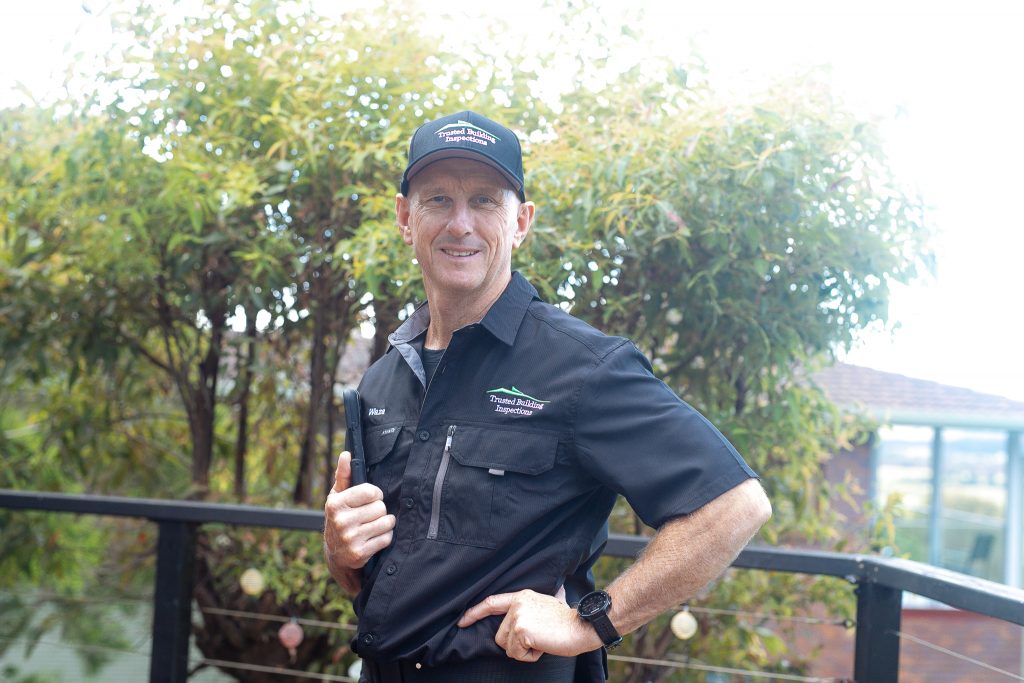
Book a building inspection on the Sunshine Coast
As a total I’ve inspected more than 3,700 properties across the Sunshine Coast and Gympie over 40 years. QBCC Licensed (#1206986). Pest Licensed (#PMT007766319). A Combination of Moisture meter, thermal imaging, Termatrac, and Bosch Laser level are used with every inspection.
Call me directly on 0469 904 139 or book online here.
Not sure which inspection type suits your property? See our building and pest inspection services or get in touch and I’ll point you in the right direction.